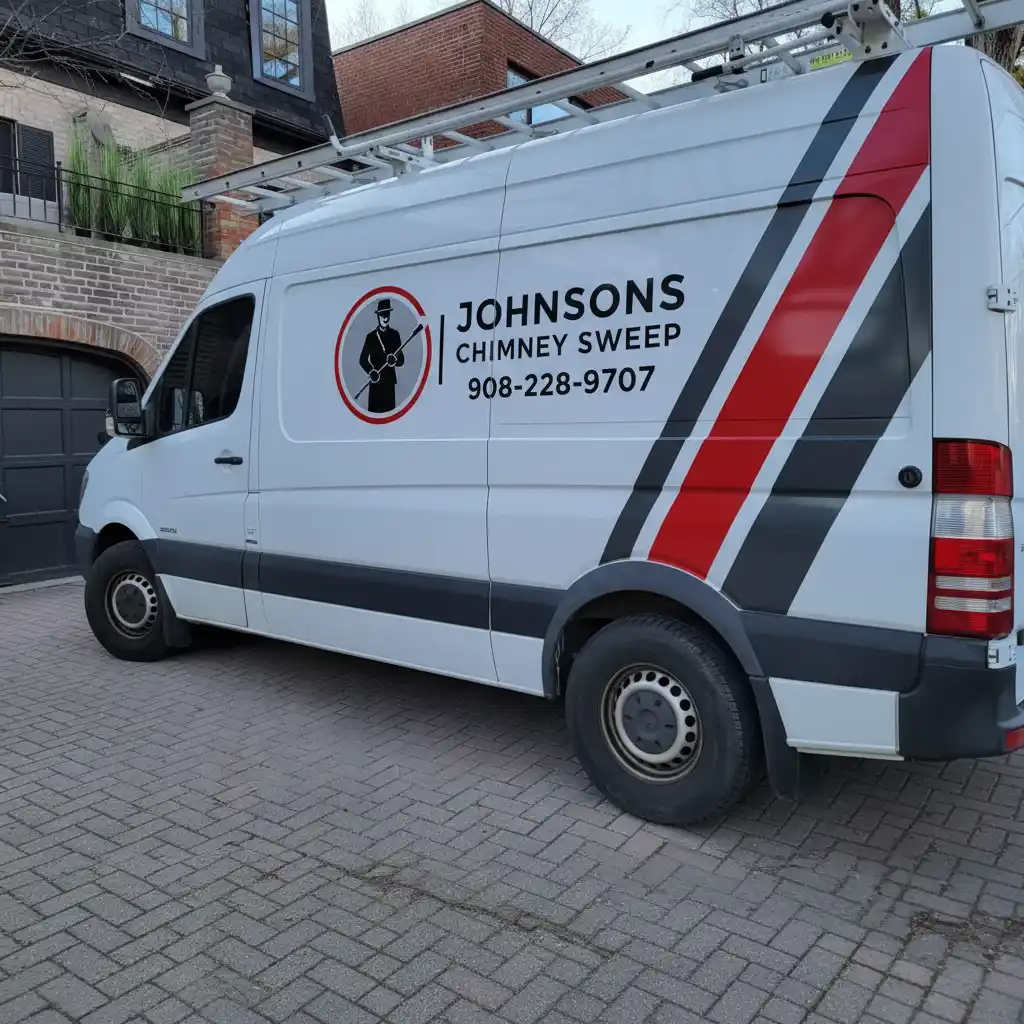
When smoke cools on its way up a Lodi chimney, the tar it carries sticks to the masonry, and that accumulation is what a sweep removes. The team masks the firebox opening, pulls negative air through a HEPA system, and works the brush through the smoke chamber, flue, and damper area in sequence. The wood-burning culture across Bergen County means many of these chimneys see heavy use and need a sweep more often than the once-a-decade myth suggests. We document the creosote level we found so you have a real baseline for when the next sweep is genuinely due. Reach 908-228-9707 for a Bergen County sweep that comes with photos, not a sales pitch.
- HEPA-filtered, no-mess process
- Flue, smoke chamber, and damper cleaned
- Cap and crown checked from the roof
- Before-and-after photos
- Honest sweep-or-skip recommendation
Why You Want Keeping This In Check Done Properly
The mark of a careful sweep is what you do not find on the furniture. Drop cloths, a sealed opening, and a HEPA vacuum come before any brushing begins. We reach past the damper into the smoke chamber, where the heaviest residue usually collects. It is the difference an experienced crew actually makes.
Ask what actually destroys a Lodi chimney over time and the answer is almost always water, not fire. Absorbed rainwater turns to ice in the brick, and ice takes up more room than water, so the masonry splits. Ignore the first crack and the freeze-thaw cycle compounds it into a problem that reaches the liner. Catch the moisture path in time and you keep a maintenance bill from becoming a construction project.
Good sweeping is a controlled, contained job from start to finish. We protect the room with drop cloths and a sealed containment, then run a HEPA vacuum under negative pressure the whole time. We check the cap, the crown, and the damper while we are at it, since they are easiest to assess from up top. That attention to detail is what the photos end up proving.
How We Tackle This Properly Start to Finish
A proper sweep is a clean-house process, not a quick brush-and-go. The hearth is covered, containment is sealed at the opening, and HEPA filtration runs for the entire visit. We finish by checking the damper, clearing the smoke shelf, and confirming the firebox is cleaner than we found it. That is just how we run every Lodi service call.
We keep it methodical, which is exactly what a chimney job should be. You reach a person who understands chimneys, we book a time that suits you, and we come ready to work. We protect your floors and furnishings, complete the work, document the before-and-after, and explain it in plain language. That predictability is what takes the anxiety out of a chimney call.
A proper sweep is a clean-house process, not a quick brush-and-go. We mask the opening, pull negative air through a HEPA vacuum, and brush the flue top-down and bottom-up. We also reach the smoke chamber and smoke shelf above the damper, where a quick once-over skips the residue that hides. That attention to detail is what the photos end up proving.
Working Chimneys We Work On Daily the Right Way in Bergen County
Covering Lodi and its Bergen County neighbors week after week, the local patterns are second nature to us. The local stock leans old and heavily used, which means creosote, cracked crowns, and tired flashing are routine here. Every call adds to a picture of the area's chimneys that an out-of-town outfit simply does not have. That experience keeps the quote honest and the work efficient.
Done properly, a sweep leaves no trace in the room behind it. The work area is sealed and HEPA-filtered before a brush moves, then we sweep the flue thoroughly. We finish by checking the damper, clearing the smoke shelf, and confirming the firebox is cleaner than we found it. It is a small thing that says everything about the job.
The Safety Behind Keeping Up With It Without the Upsell
The real job of a chimney is to keep a fire from becoming a house fire. A flue lined with creosote is a fire waiting for a hot enough night, and a cracked liner lets heat reach the framing around the chimney. Every winter brings preventable chimney fires, and prevention is just maintenance done on time. Keeping the fire contained is the real job behind all the masonry talk.
The chimney trade is unfortunately known for the upsell. The "$99 special" that becomes a thousand-dollar invoice, the invented emergency, the upsell on a sound flue — that is the wrong way, and it has given the whole trade its bad name. Johnsons Chimney Sweep is built to be the opposite: we tell you what your chimney needs and what it does not, and we back both with photos. If your chimney is in good shape, we will simply tell you so and let you enjoy the season.
A real sweep protects the house first and cleans the flue second. We protect the floor and furnishings, run HEPA negative air, and brush from both ends of the flue. We reach past the damper into the smoke chamber, where the heaviest residue usually collects. It is the difference an experienced crew actually makes.
How this fits the bigger job
A chimney is a system, so chimney sweep rarely stands alone — it connects to Level 2 inspection, brick repair, flue cap, crown rebuild, stainless flue liner, and our crew handles all of it under one roof. We bring the same service to Chimney Sweep in Hackensack, Chimney Sweep in Garfield, Chimney Sweep in Passaic, Clifton chimney sweep and everywhere else across Bergen County.
If you searched for a local chimney crew near you, you have reached a local crew — call 908-228-9707 any time. For background, read Inside a Level 2 Chimney Inspection in Lodi on our blog, or head back to our Lodi home page to see everything we do.